Supply Chain Management in ERP: What It Actually Does for Your Business
A customer places an order. Sales confirms the delivery date. The warehouse checks stock. Purchasing realizes one component is running low. A supplier says the next shipment will be late. Production already has several jobs scheduled. Logistics still needs to arrange delivery. Finance wants to know how much the order will actually cost.
This is supply chain management in real life. The problem is that many businesses manage each part separately. Purchasing has spreadsheets. Inventory lives in another system. Warehouse teams use their own records. Sales cannot always see what is actually available. Suppliers communicate through email. Finance only sees the financial impact after transactions are processed.
When these processes are disconnected, small problems quickly become expensive ones. You buy too much of one product and run out of another. Customers are promised stock that is not actually available. Warehouses carry unnecessary inventory. Purchase orders are delayed. Production waits for materials. Managers spend hours trying to understand what went wrong.
Supply Chain Management inside an ERP is designed to connect those activities. It brings demand planning, purchasing, suppliers, inventory, warehouses, production, orders, logistics, and financial information into a connected system so sourcing, planning, inventory, logistics, and financial decisions work toward the same company goals.
What Is Supply Chain Management in ERP?
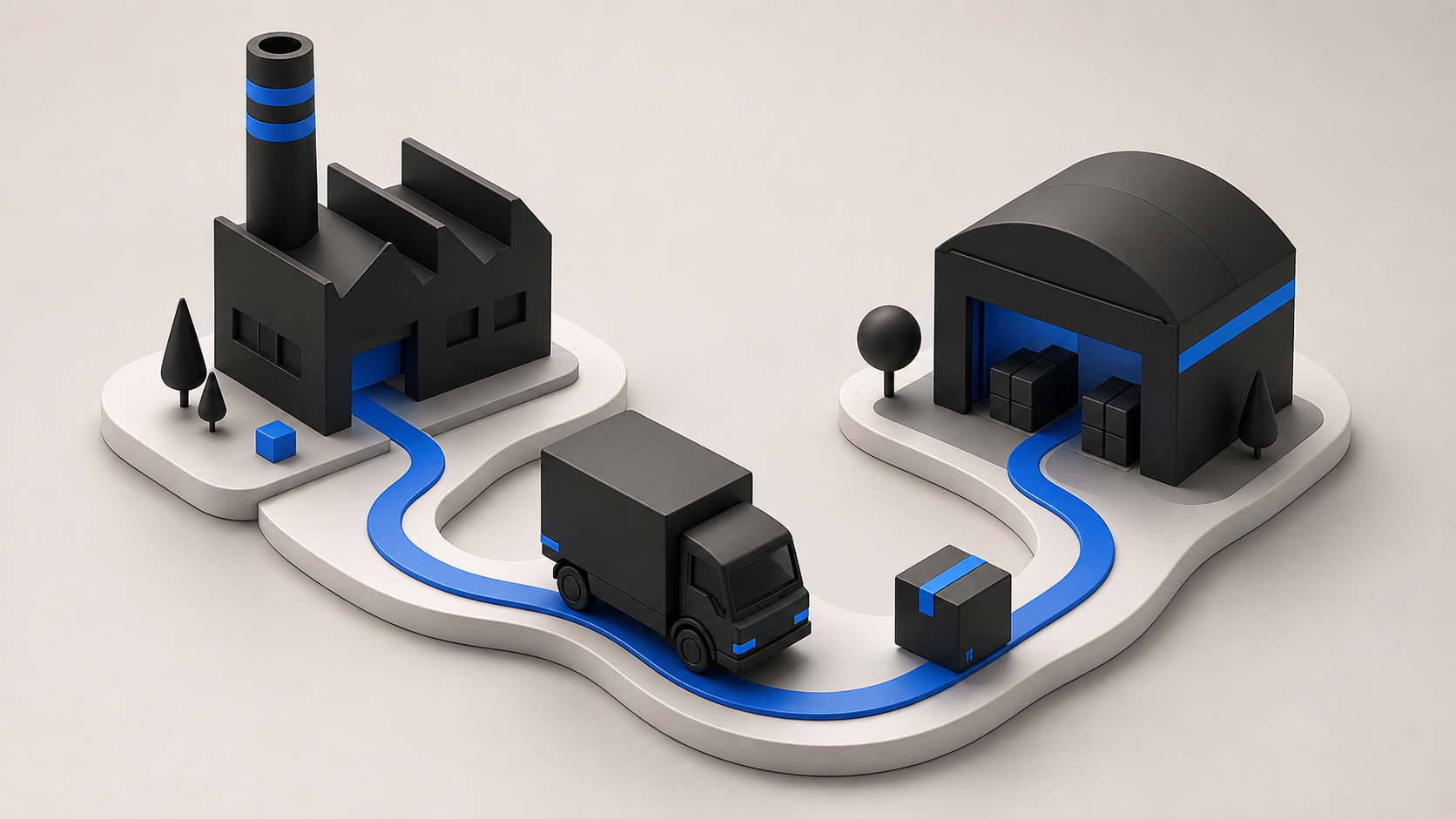
Supply Chain Management, usually shortened to SCM, manages how products, materials, information, and services move through a business. A simple supply chain might look like Supplier → Manufacturer → Warehouse → Distributor → Customer. Real supply chains can be much more complicated, with hundreds of suppliers, several factories, multiple warehouses, retail stores, e-commerce channels, international shipments, third-party logistics providers, and customers in different regions.
ERP adds the connection to the rest of the business. Instead of supply chain information existing separately, the ERP can connect it with sales, finance, manufacturing, purchasing, inventory, customer orders, accounting, assets, and product information. SCM manages the movement of goods. ERP connects that movement to what the rest of the company is doing.
ERP and Supply Chain Management: What Is the Difference?
ERP manages the broader business finance, accounting, HR, sales, procurement, manufacturing, inventory, projects, and customer management. SCM focuses more specifically on planning and controlling the flow of products, materials, suppliers, inventory, and fulfillment.
A standalone supply chain system might help optimize inventory or transportation. An ERP connects those decisions to financial and operational records. Purchasing 10,000 units of raw material affects supplier commitments, cash flow, accounts payable, warehouse space, production plans, product cost, and working capital. That is why supply chain management becomes much more powerful when connected with ERP.
What Does Supply Chain Management in ERP Actually Do?
A good ERP supply chain system usually manages the process from demand all the way to delivery: Forecast Demand → Plan Supply → Buy Materials → Receive Inventory → Store Products → Produce or Distribute → Fulfill Orders → Ship → Deliver → Handle Returns.
1. Demand planning
Everything starts with demand. If the estimate is too low, the business may run out of products. If it is too high, money gets trapped in inventory nobody wants. Demand planning uses historical sales, current orders, seasonal patterns, promotions, customer trends, market information, and forecasts to give the rest of the supply chain a better starting point not a perfect prediction of the future.
2. Supply planning
Once expected demand is clear, supply planning looks at available inventory, incoming purchases, supplier lead times, manufacturing capacity, production schedules, warehouse stock, transportation, safety stock, and customer requirements. If demand planning says you need 20,000 units next month and you only cover part of that through stock, incoming purchases, and production, the ERP helps identify the gap before customers start placing orders.
3. Procurement and purchasing
ERP procurement can manage the process from identifying a requirement through purchasing and supplier payment purchase requests, approvals, requests for quotation, supplier selection, purchase orders, contracts, receiving, supplier invoices, and payments. Instead of employees independently ordering whatever they need, purchasing can follow agreed suppliers, prices, contracts, and approval rules.
4. Supplier management
Businesses also need to know whether suppliers deliver on time, whether prices are changing, how often products are rejected, which suppliers are critical, which contracts are expiring, and how dependent the company is on one vendor. ERP can centralize supplier information and purchasing history so repeated late deliveries or quality problems become visible as patterns rather than isolated purchase orders.
5. Inventory management
Businesses need to know what is in stock, where it is, what is reserved, what is available, what is damaged, what is in transit, what has been ordered, what is waiting for inspection, and what needs replenishment. A company may technically have 1,000 units, but if 800 are already committed to customer orders, only 200 are actually available. That distinction matters.
6. Replenishment
ERP can help answer when to order more using minimum and maximum stock, safety stock, demand forecasts, reorder points, supplier lead times, and production requirements. If normal demand is 1,000 units per week and the supplier takes three weeks to deliver, waiting until only 500 units remain is too late. Connected planning can create replenishment signals before inventory reaches a dangerous level.
7. Warehouse management
Inventory tells you what you have. Warehouse management helps control where it is and how it moves inside the warehouse receiving, putaway, storage locations, bins, picking, packing, replenishment, transfers, cycle counts, and shipping. Knowing you have 600 units is useful. Knowing those units sit across specific bins and which ones should be picked first is operationally much more useful.
8. Production and material planning
For manufacturers, supply chain ERP connects with production: what needs to be produced, what materials are required, what is available, what must be purchased, which production orders have priority, and what capacity is available. If production needs a component next Tuesday, procurement needs to know before Monday afternoon.
9. Order management
ERP order management connects sales orders with available inventory and fulfillment order capture, product availability, pricing, shipment, backorders, order changes, and delivery status. This matters particularly for businesses selling through several channels, where an online order and a wholesale promise can otherwise claim the same stock.
10. Logistics, transportation, and returns
Supply chain ERP can help coordinate carriers, shipping, routes, freight, delivery schedules, transportation costs, and tracking. The goal is to deliver at the promised time without destroying the margin. Supply chains also move in reverse customer returns, unsold inventory, defective goods, packaging recovery, and recycling. ERP helps connect those returns with inventory, customer records, refunds, quality, finance, and warehouse operations.
How All of These Processes Connect
The real value of ERP is not having eleven separate modules. It is what happens when they share information. A large customer order can trigger an inventory check, planning identifies a shortage, production needs additional materials, procurement creates the requirement, the supplier confirms delivery, production is scheduled, warehouse teams receive materials, finished inventory becomes available, the order is released, goods are picked and packed, transportation is arranged, and finance records purchasing, inventory value, product cost, revenue, and payment.
One event creates the next action. Employees do not need to rebuild the process manually across several disconnected systems.
What Does Supply Chain ERP Actually Do for the Business?
- Better inventory control reduce overstocking, stockouts, emergency purchasing, obsolete stock, and unnecessary warehouse space.
- Better cash flow understand what inventory is actually required and where working capital is tied up.
- Fewer production delays identify material requirements earlier so procurement can respond before the production date arrives.
- More reliable customer promises base delivery dates on available inventory, incoming supply, capacity, existing commitments, and delivery time.
- Stronger supplier control objective records of what was ordered, promised, delivered, priced, and whether problems occurred.
- Less manual work fewer exports, spreadsheet handoffs, and calls between sales, operations, purchasing, and finance.
- Better visibility when something goes wrong see how a supplier delay can create material shortages, production risk, and customer-order risk before the customer starts asking where the order is.
ERP Supply Chain Management vs Separate SCM Software
Specialized systems can be stronger in areas such as advanced planning, warehouse management, transportation, demand forecasting, and supplier collaboration. Large companies often use specialized applications alongside ERP. The important thing is integration. The ERP generally acts as a central operational and financial system, while specialist tools may perform deeper optimization. The question is not whether everything must come from one product. It is whether the systems share reliable data.
Which Businesses Benefit Most?
- Manufacturers that need materials, production planning, inventory, purchasing, and distribution connected.
- Retailers balancing inventory across stores, warehouses, and online channels.
- Wholesalers and distributors that depend on purchasing, warehouse efficiency, order fulfillment, and availability.
- Food and beverage companies that need lot tracking, expiration management, supplier control, and fast inventory movement.
- E-commerce businesses that need inventory, warehouse, order, and shipping systems to stay synchronized.
- Multi-location businesses where inventory and replenishment become harder without a central system.
Signs Your Business Has Outgrown Its Current Supply Chain Setup
- Inventory numbers are frequently wrong and people call the warehouse anyway.
- Purchasing is mostly reactive materials are ordered only after someone realizes they are running low.
- Stockouts happen while other products are overstocked.
- Sales cannot see reliable availability and constantly contacts operations before confirming orders.
- Too much planning happens in a few massive spreadsheets maintained by one person.
- Nobody can explain why an order is late because each department blames another.
- Expanding to another warehouse means creating another set of manual processes.
What to Look for in an ERP Supply Chain System
- Demand and supply planning that converts forecasts into realistic supply requirements.
- Procurement covering requests, approvals, suppliers, orders, receipts, and invoices.
- Accurate inventory visibility across all relevant locations.
- Warehouse management that matches your receiving, putaway, picking, packing, and shipping complexity.
- Order fulfillment that shows what can actually be promised to customers.
- Production planning connected to material requirements and capacity, if you manufacture.
- Logistics support at the right depth basic shipping integration or full transportation planning.
- Traceability for lot, batch, or serial-number tracking where needed.
- Supplier collaboration for forecasts, purchase orders, shipping information, or confirmations.
- Reporting for inventory, supplier performance, fulfillment, shortages, and supply chain costs.
How to Implement Supply Chain Management in ERP
- Map the current supply chain for one real product from supplier to customer, including systems, spreadsheets, approvals, manual steps, delays, duplicate data entry, and common errors.
- Clean master data products, SKUs, suppliers, lead times, units of measure, inventory, warehouse locations, customer addresses, reorder rules, and bills of materials where applicable.
- Define inventory rules such as minimum stock, safety stock, reorder rules, preferred suppliers, lead times, warehouse policies, and reservation rules.
- Integrate core processes so purchase orders affect inventory and finance, and customer orders affect availability and fulfillment.
- Test real problems late suppliers, stockouts, demand spikes, order changes, damaged inventory, wrong receipts, and returns.
- Train by role for buyers, supply planners, warehouse teams, production planners, salespeople, finance, and managers.
- Measure results such as inventory accuracy, turnover, stockout rate, supplier on-time delivery, fulfillment rate, forecast accuracy, purchase-order cycle time, picking accuracy, carrying cost, and perfect order rate.
Common Supply Chain ERP Mistakes
- Automating bad processes instead of fixing unnecessary approvals and handoffs first.
- Trusting poor inventory data and building plans on incorrect availability.
- Ignoring unrealistic supplier lead times.
- Letting every department configure its own process without designing connected workflows.
- Customizing too early instead of using standard ERP workflows where they fit.
- Expecting AI forecasting and automation to fix unreliable inventory, incorrect supplier records, and inconsistent processes.
Which ERP Platforms Support Supply Chain Management?
- SAP Cloud ERP inventory, warehouse management, order promising, transportation, production, and wider supply chain processes.
- Microsoft Dynamics 365 Supply Chain Management planning, procurement, manufacturing, order management, warehousing, and asset management.
- Oracle Fusion Cloud SCM connected applications across procurement, order management, planning, inventory, manufacturing, and related operations.
- Infor demand, supply, inventory, production scheduling, integrated business planning, and related supply chain processes.
- Odoo ERP a modular option for smaller and mid-sized organizations whose requirements do not justify a large enterprise implementation.
Smaller and mid-sized organizations can also evaluate modular platforms such as Odoo ERP. The right platform depends on supply chain complexity, business size, manufacturing requirements, warehouse operations, integrations, and budget.
Where to Go From Here
Supply Chain Management in ERP is not simply an inventory feature. It connects the decisions that happen before, during, and after inventory moves what customers will need, what you already have, what you should buy, which supplier should provide it, where inventory should go, whether production can meet demand, whether you can promise a customer order, how it should be shipped, and what the entire process cost.
Start by mapping how one product moves from supplier to customer. Find the points where data becomes unreliable, employees repeat work, stock sits unnecessarily, shortages appear, or customer orders get delayed. Then evaluate whether your existing system can connect those processes properly. If it cannot, moving to a more integrated ERP solution can give the business a clearer view from demand and purchasing through inventory, fulfillment, and finance. The goal is not to own more supply chain software. It is to know what needs to happen next before a problem becomes expensive.
Frequently Asked Questions
What is supply chain management in ERP?
Supply chain management in ERP connects processes such as demand planning, procurement, suppliers, inventory, warehousing, production, orders, logistics, and finance so businesses manage the movement of products and materials using shared operational data.
What is the difference between ERP and SCM?
ERP manages a broader range of business functions, including finance, sales, HR, procurement, manufacturing, and inventory. SCM focuses specifically on planning and controlling the flow of materials, products, suppliers, inventory, and fulfillment. SCM functionality can be built into or integrated with ERP.
What are the main supply chain modules in ERP?
Common functions include demand planning, supply planning, procurement, supplier management, inventory, warehouse management, production planning, order management, transportation, and reporting.
How does ERP improve inventory management?
ERP connects inventory with sales orders, purchasing, production, warehouses, and demand plans. This gives businesses a more accurate view of what is available, committed, incoming, and required, which can help reduce both stockouts and excess inventory.
Can ERP automatically reorder stock?
Yes, many ERP systems can create replenishment or purchasing recommendations based on demand, inventory levels, reorder points, safety stock, lead times, and other planning rules. The exact level of automation depends on the platform and configuration.
Does ERP replace a warehouse management system?
Not always. Some ERP platforms include strong warehouse management capabilities, while businesses with complex warehouse operations may use a dedicated WMS integrated with ERP. The important requirement is accurate, timely data exchange between the systems.
How does ERP help with supplier management?
ERP can centralize supplier information, contracts, purchase orders, delivery records, prices, invoices, and performance data. This makes it easier to compare suppliers and identify issues such as late deliveries or repeated quality problems.
What businesses need supply chain ERP?
Manufacturers, retailers, wholesalers, distributors, e-commerce companies, food businesses, and other organizations handling significant physical inventory usually gain the most value. The need increases as the number of products, suppliers, warehouses, locations, and sales channels grows.
Ready to estimate your app cost?
Use our free calculator to get a personalised cost breakdown in 2 minutes.
Calculate Your App Cost